Countries / Southeast Asia

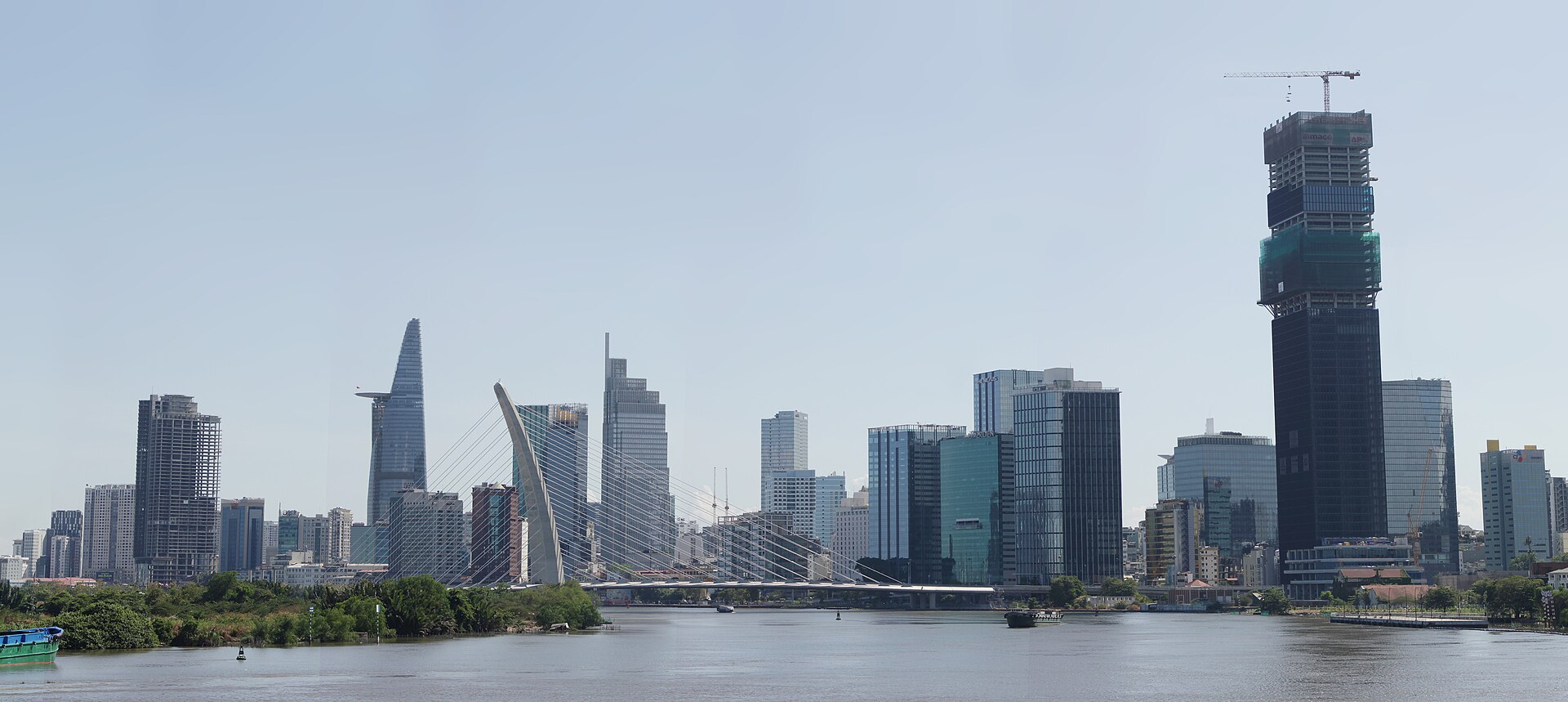
Vietnam skyline
Wikimedia Commons (CC BY-SA 4.0)
Southeast Asia

Investing in Vietnam

One of the fastest-growing retail brokerage bases in the region, riding a wave of manufacturing-led growth and a young population opening its first trading accounts online.

13m+securities accounts, May 2026
~13%of the population holds one
21 Sep 2026FTSE emerging-market upgrade
0.1%tax per securities sale
Capital
Hanoi
Currency
Vietnamese đồng
Main exchange
Ho Chi Minh Stock Exchange (HOSE) & Hanoi Stock Exchange
Regulator
State Securities Commission of Vietnam

How people invest in Vietnam

Real estate remains the aspirational asset for most households; gold is a trusted store of value during currency volatility; HOSE equities (banks, property developers, manufacturers) attract an increasingly active domestic day-trading crowd.

Real estateGoldHOSE equitiesBank deposits

Getting access

Residents and international investors face completely different mechanics here, so they are set out separately rather than blended into one set of instructions.

Living in Vietnam

Opening an account as a resident

Domestic account opening is now almost entirely in-app and takes minutes rather than a branch visit — one reason the account base has grown as fast as it has.

  1. Choose a broker. VPS has led HOSE brokerage market share for several years running (14.14% across the first half of 2026), with SSI and TCBS the closest challengers; VNDirect, VPBankS, HSC and Vietcap make up most of the rest. The top ten firms held 65.19% of the market in Q2 2026 — the lowest concentration in years, so pricing and app quality are genuinely competitive.
  2. Complete eKYC in the broker app using a chip-based CCCD citizen ID card. No branch visit is required for a standard cash account.
  3. Link a domestic bank account for funding. Your securities account is registered with the Vietnam Securities Depository and Clearing Corporation (VSDC), which holds the shares centrally.
  4. Trade HOSE, HNX and UPCoM in đồng. Settlement runs on a T+2 cycle; margin lending is widely offered and heavily used.
  5. For funds rather than single stocks, open-ended fund certificates are distributed through broker apps and through the Fmarket platform. Minimum subscriptions are deliberately small — VinaCapital funds start at VND 100,000 — which makes monthly contributions realistic on an ordinary salary.

Foreigners legally resident in Vietnam sit somewhere between the two routes: you can generally open a domestic brokerage account, but you still need a securities trading code, and foreign ownership limits still apply to your holdings.

Investing from abroad

Opening access as a non-resident

The direct route into Vietnamese equities is real but administratively heavy, and it has changed materially in the last two years. Most individual investors abroad skip it and use offshore funds instead; institutions increasingly do not have to.

  1. Apply for a securities trading code from the VSDC. Nothing trades without it, and the application runs through a licensed local custodian or broker.
  2. Open an Indirect Investment Capital Account (IICA) in đồng at a licensed Vietnamese bank. This is the single most important structural fact for a foreign investor: every dong going in and every dong coming out must pass through this account. It is the choke point for repatriation.
  3. Appoint a local custodian and broker. Foreign institutional flow has historically had to be intermediated locally.
  4. Check the foreign ownership limit (FOL) on each ticker before you buy. Caps are typically 49%, and 30% for banks; several of the most-wanted names sit at their limit, so the shares simply are not available on-market at any price.
  5. Pre-funding: since Circular 68/2024/TT-BTC took effect on 2 November 2024, eligible foreign institutional investors no longer have to deposit the full trade value before placing a buy order — settlement obligations just have to be met inside the T+2 cycle. Circular 08/2026/TT-BTC (issued 4 February 2026) went further and allows foreign investors to route trades through international brokerage intermediaries rather than requiring a direct relationship with a Vietnamese securities firm.

Those two reforms are precisely what FTSE Russell had been asking for, and they are the reason the reclassification went through. They ease *access*, not *ownership* — the foreign ownership caps are untouched.

What you can actually buy

The four assets Vietnamese households actually use are not the four an outside investor can easily reach, and each carries a local mechanic that a generic guide will not mention. Taken one at a time:

Listed equities (HOSE, HNX, UPCoM)

Both

Three boards, in descending order of quality and liquidity: HOSE in Ho Chi Minh City carries the large caps and the VN-Index; HNX in Hanoi is smaller; UPCoM is the unlisted-public-company board, where disclosure is lighter and liquidity can be close to nil. The market is bank- and property-heavy, and a handful of names drive the index.

The local mechanic: The VN-Index closed 2025 near 1,800 points, up more than 40% on the year. Momentum like that is a poor entry signal on its own — the market's previous record, around 1,530 in January 2022, was followed by a severe drawdown.

Fund certificates and domestic ETFs

Residents

Open-ended funds are the fastest-growing on-ramp for Vietnamese retail savers, and the honest case for them is strong: a number of domestic equity funds have outperformed the VN-Index, which is unusual enough to be worth stating. Dragon Capital, VinaCapital, SSIAM and Techcom Capital run the largest ranges, distributed through broker apps and Fmarket.

The local mechanic: Minimums as low as VND 100,000 make these accessible in a way single-stock investing with a meaningful position size is not. Domestic ETFs tracking VN30 and VNDiamond exist as well, the latter built specifically around stocks that have exhausted their foreign ownership room.

Government and corporate bonds

Both

Government bonds are institutionally held and not really a retail product. Corporate bonds are the opposite: they were sold hard to retail savers through bank branches in the 2017–2021 boom, and the 2022 collapse of that market is the defining recent event in Vietnamese finance.

The local mechanic: Individuals can only buy privately placed corporate bonds if they qualify as professional investors — broadly, a securities portfolio of at least VND 2 billion or taxable income of at least VND 1 billion in the most recent year — and issuers must now carry a credit rating, collateral or a payment guarantee. Q1 2026 issuance reached about $1.22 billion, up 22% year on year, so the market is recovering rather than recovered.

Gold

Residents

Gold is not a fringe asset in Vietnam; it is a mainstream household store of value, used through currency instability and inflation, and traded in tael (lượng) rather than ounces. It is also the asset class where the rules changed most in the last year.

The local mechanic: Decree 232/2025/ND-CP, issued 26 August 2025 and effective 10 October 2025, ended thirteen years of state monopoly on gold-bar production under the old Decree 24/2012 regime. The State Bank now licenses qualifying institutions instead — banks need VND 50 trillion of charter capital, enterprises VND 1 trillion, which in practice means a short list including Vietcombank, VietinBank, BIDV, Agribank, Techcombank, MB, VPBank, plus PNJ, DOJI and SJC. Separately, since 1 July 2026 gold bar transfers carry a 0.1% personal income tax.

Real estate

Both

The aspirational asset for most Vietnamese households, and the one most likely to be bought with leverage. For foreigners it is possible but boxed in, and the box is worth understanding before you fall in love with a listing.

The local mechanic: Vietnam has no freehold land — what changes hands is a land use right. Foreign buyers are capped at 30% of the units in any one apartment building, and are limited by house count within a ward-level area. Foreign ownership normally runs as a renewable 50-year term rather than indefinitely; a foreigner married to a Vietnamese citizen is exempt from that limit under Article 19 of the Housing Law 2023. The same 2023 Housing Law and 2024 Land Law also permitted foreigner-to-foreigner resale, which materially improved exit liquidity.

Bank deposits

Residents

Still the default home for household savings, and still the benchmark every other asset is implicitly measured against. Rates are set in a competitive market but within a policy corridor; headline promotional rates advertised for large or long deposits are not what a typical saver receives.

The local mechanic: The real question for a đồng depositor is not the nominal rate but the rate net of inflation and net of currency drift — a deposit yielding mid-single digits in đồng is a different proposition measured in dollars.

Crypto and digital assets

Both

Vietnam has consistently ranked among the highest crypto-adoption countries in the world, for years while the legal position was simply undefined. That ended this year.

The local mechanic: The Law on the Digital Technology Industry, passed 14 June 2025, took effect 1 January 2026 and defines digital and crypto assets in statute for the first time. A five-year licensing pilot for crypto-asset trading platforms opened for applications on 20 January 2026, with roughly five exchanges expected to be approved; the capital bar is deliberately severe (VND 10 trillion, around $380 million) and foreign ownership in a licensed operator is capped at 49%. Since 1 July 2026, digital asset transfers carry the same 0.1% transaction tax as securities.
The fund and ETF route

For most international investors — and for anyone who does not want to run an IICA — the practical route into Vietnam is a fund listed somewhere else. This is not an endorsement or a recommendation of any product below; it is a map of the vehicles that exist, and you should check current size, fees and holdings yourself before acting.

VehicleTypeForNotes
VanEck Vietnam ETF (VNM)US-listed ETFInternationalThe largest and most liquid Vietnam-dedicated ETF, tracking the MarketVector Vietnam Local Index. Expense ratio around 0.68%. Widely used as the proxy for foreign sentiment toward the market.
Fubon FTSE Vietnam ETFTaiwan-listed ETFInternationalA large regional vehicle tracking the FTSE Vietnam 30 index; its flows have at times been big enough to move individual Vietnamese names.
Xtrackers FTSE Vietnam Swap UCITS ETFUCITS ETFInternationalThe main UCITS route, so typically the one accessible to European investors. Swap-based, which brings counterparty considerations a physical fund does not have.
Vietnam Enterprise Investments (VEIL)London-listed closed-end fundInternationalManaged by Dragon Capital and one of the longest-running Vietnam vehicles available to outside investors. As a closed-end fund it can trade at a discount or premium to net asset value.
VinaCapital Vietnam Opportunity Fund (VOF)London-listed closed-end fundInternationalAlso LSE-listed, with a mandate that has historically extended beyond listed equities into private and pre-IPO positions.
Domestic open-ended fundsOnshore mutual fundsResidentsDragon Capital (DCDS), VinaCapital (VEOF, VESAF, VMEEF), SSIAM and Techcom Capital (including bond funds) — bought in đồng through broker apps or Fmarket, from VND 100,000.

Informational only — not an endorsement, recommendation or paid placement. See the full platforms, banks and funds directory.

Startups, angels and venture capital

Public markets are only half the picture. Vietnam has one of Southeast Asia's more active startup ecosystems, and — unlike the listed market — it is a place where individual angels, not just funds, genuinely participate.

New to private-market investing? Start with our guide to getting started, or browse the family capital directory for the region's most active private allocators.

Tax on investment income

Vietnam taxes securities sales on a percentage of *proceeds*, not on your gain. That single design choice surprises almost every investor arriving from a capital-gains jurisdiction: you owe the tax on a losing trade exactly as you do on a winning one.

WhatRateApplies to
Sale of listed securities0.1% of gross sale proceedsIndividuals — resident and non-resident
Alternative method on securities20% of net taxable gainWhere elected and expenses can be substantiated
Cash dividends5%Individuals. Stock dividends are taxed on later sale, not on receipt
Interest (including bond coupons)5%Individuals. Bank deposit interest for individuals is exempt
Digital asset transfers0.1% of transaction valueNew — in force from 1 July 2026
Gold bar transfers0.1% of transaction valueNew — in force from 1 July 2026
Tax residency threshold183 daysPresence in Vietnam in a 12-month period, broadly

Vietnam's amended Personal Income Tax Law (Law No. 109/2025/QH15) took effect on 1 July 2026, raising personal deductions, cutting the bracket count from seven to five while keeping a 35% top rate, and extending the 0.1% transfer charge to digital assets, gold bars, carbon credits and auctioned licence plates. The Ministry of Finance has separately floated moving securities and equity transfers onto a 20% capital-gains basis — treat that as a live proposal, not settled law. This is general information, not tax advice; rates and thresholds move, double-tax treaty positions vary by country of residence, and you should confirm your own position with a qualified Vietnamese adviser.

Risks worth pricing in

International

What international investors should weigh

Vietnam is a genuinely attractive growth story that is also a market where the plumbing, not the thesis, is what usually costs foreign investors money. In rough order of how often it bites:

  • Foreign ownership room can make a stock unbuyable. Caps of 49% generally, and 30% for banks, mean several of the most obvious names are simply full. When room does open it is often taken instantly or traded off-market at a premium. There is still no broadly available depositary-receipt workaround of the kind Thailand's NVDRs provide, and the 2024–2026 reforms deliberately addressed access rather than ownership.
  • Getting money out runs through one account. Repatriation flows through your Indirect Investment Capital Account, with documentation and tax clearance attached. It works — but it is a process with a timeline, not a same-day wire, and it should be modelled before you need the money rather than after.
  • Currency can quietly eat the equity return. The đồng is a managed float: the State Bank sets a daily central rate and commercial banks trade within a band around it. The rate has drifted persistently weaker — the central rate sat around 25,148 per dollar in late 2025 while market rates moved past 26,300 during 2026, and forecasters have been penciling in continued depreciation. A strong year in đồng terms can be a mediocre one in dollars.
  • The index upgrade is a flow event, not a valuation guarantee. FTSE Russell's reclassification to Secondary Emerging status takes effect on 21 September 2026, with an initial cohort of around 28 Vietnamese stocks entering the global index series. It was announced in October 2025 and confirmed at the March 2026 interim review, which means it has been public for the better part of a year and is at least partly in the price. Index inclusion changes who owns the market; it does not by itself make the market cheap.
  • Governance and disclosure quality is uneven. The Van Thinh Phat and Saigon Commercial Bank case — in which Truong My Lan was convicted over the fraudulent issuance of bonds, with tens of trillions of đồng misappropriated from investors — is the reference scandal for a reason. English-language disclosure varies widely below the largest caps, and it thins out sharply on UPCoM.
  • Market plumbing is still catching up. The KRX-built trading system went live on 5 May 2025 and was the precondition for much of what followed, but central counterparty clearing, intraday trading and broad short selling remain roadmap items rather than live features. Settlement runs on a T+2 cycle. Liquidity outside the large caps can disappear quickly.
Residents

What domestic investors should weigh

The risks that have actually cost Vietnamese households money in the last five years are different ones, and mostly closer to home:

  • Margin lending amplifies both directions. Retail margin is a large and growing share of market turnover, and brokerage balance sheets have been expanding to supply it. In a drawdown, forced liquidation turns an ordinary correction into a much faster one — the mechanism that made the 2022 fall from the January record so severe.
  • Corporate bonds are not a deposit substitute. They were sold as one. The professional-investor test — roughly a VND 2 billion securities portfolio or VND 1 billion of taxable income — exists precisely because that mis-selling happened through bank branches to savers who read "bond" as "safe". New issues must now carry a rating, collateral or a guarantee; that is an improvement, not immunity.
  • The gold premium is its own risk. Domestic gold bars have historically traded at a wide premium to the world price because supply was constrained by the state monopoly. With Decree 232/2025 opening production to licensed institutions, the expectation is that the premium narrows — which means a buyer at a wide premium can lose money even if world gold does nothing. And since 1 July 2026 there is a 0.1% tax on each transfer.
  • Property leverage and project risk. Pre-sale purchases in unfinished projects carry developer solvency risk, as the 2022–2023 credit squeeze demonstrated. What you own is a land use right within a legal framework that was substantially rewritten by the 2023 Housing Law and 2024 Land Law — worth reading properly, not skimming.
  • Deposits lose slowly. The headline rate on a promotional term deposit is not the rate most savers get, and the rate that matters is the one after inflation. Steady real erosion is less dramatic than a market crash and has cost Vietnamese households more.
  • Crypto is legal now, but not all of it. The Law on the Digital Technology Industry gives crypto assets a legal definition, and the licensing pilot is expected to approve only around five platforms. Trading on unlicensed or offshore venues leaves you outside that framework with no domestic recourse if the venue fails — and the 0.1% transfer tax applies to each disposal regardless of whether you made money.

How the market got here

Vietnam's market is young enough that its whole history fits on one page — and recent enough that most of the rules an investor deals with today were written in the last four years.

  1. 2000The Ho Chi Minh City trading centre opens, with a handful of listed stocks. It later becomes HOSE.
  2. 2005The Hanoi trading centre opens, later becoming the Hanoi Stock Exchange (HNX).
  3. 2007WTO accession brings the first serious wave of foreign portfolio capital.
  4. 2009UPCoM launches as a board for unlisted public companies.
  5. 2012Decree 24 establishes the state monopoly on gold bar production and the SJC brand.
  6. 2021The Vietnam Exchange (VNX) is established as the holding company over HOSE and HNX.
  7. Jan 2022The VN-Index sets a record near 1,530 points.
  8. Oct 2022The Van Thinh Phat / Saigon Commercial Bank scandal breaks. The corporate bond market seizes up and equities fall hard.
  9. Sep 2022Decree 65/2022 tightens private corporate bond placement; Decree 08/2023 follows to ease restructuring.
  10. Nov 2024Circular 68/2024 removes the pre-funding requirement for eligible foreign institutional investors.
  11. May 2025The KRX-built trading system goes live at HOSE on 5 May, replacing infrastructure that had been a bottleneck for years.
  12. Oct 2025Decree 232/2025 takes effect, ending the 13-year state monopoly on gold bar production. FTSE Russell announces Vietnam's upgrade to Secondary Emerging status.
  13. Dec 2025The VN-Index finishes the year near 1,800, up more than 40%.
  14. Jan 2026The Law on the Digital Technology Industry takes effect, defining crypto assets in statute. Licensing applications open for a five-year crypto exchange pilot.
  15. Feb 2026Circular 08/2026 allows foreign investors to trade via international brokerage intermediaries.
  16. May 2026Domestic securities accounts pass 13 million — around 13% of the population, and well beyond the 11 million the government had targeted for 2030.
  17. Jul 2026The amended Personal Income Tax Law takes effect, extending the 0.1% transfer tax to digital assets and gold bars.
  18. Sep 2026Vietnam's reclassification to FTSE Secondary Emerging status takes effect on 21 September.

Trends shaping Vietnam

Regional investing patterns that show up strongly in Vietnam — read the full analysis in investing trends.

Other Southeast Asia markets

Ready to put capital to work?

Browse platforms, banks, and funds active in Southeast Asia, or read our start-investing guide.

See platforms & funds

Frequently asked questions

Can a foreigner buy stocks in Vietnam?
Yes. You need a securities trading code from the Vietnam Securities Depository and Clearing Corporation and an Indirect Investment Capital Account (IICA) at a licensed Vietnamese bank, arranged through a local custodian or broker. Foreign ownership limits still apply per stock — generally 49%, and 30% for banks — and some popular names are permanently at their cap. Most individual investors abroad find an offshore Vietnam fund or ETF simpler.
What is an IICA and why does it matter?
The Indirect Investment Capital Account is a đồng-denominated account a non-resident must hold at a licensed Vietnamese bank. Every dong of investment capital coming in, and every dong of proceeds going out, has to pass through it. It is the mechanism through which Vietnam manages portfolio capital flows, and it is the thing to understand before you invest rather than when you want to exit.
How is investing taxed in Vietnam?
Individuals pay 0.1% of gross sale proceeds on securities disposals — on the sale value, not the gain, so the tax applies to losing trades too. Cash dividends and bond interest are taxed at 5% for individuals, while individual bank deposit interest is exempt. Since 1 July 2026 the same 0.1% transfer charge applies to digital assets and gold bars. Rates change; confirm your position with a qualified adviser.
What is the easiest way to invest in Vietnam from abroad?
A listed fund. The VanEck Vietnam ETF (VNM) in the US is the largest and most liquid dedicated vehicle; the Fubon FTSE Vietnam ETF in Taiwan and the Xtrackers FTSE Vietnam Swap UCITS ETF cover other regions, and Dragon Capital's VEIL and VinaCapital's VOF are long-running London-listed closed-end funds. None of these requires an IICA, a trading code or a Vietnamese custodian.
What does the FTSE emerging-market upgrade actually change?
From 21 September 2026 Vietnam moves from Frontier to Secondary Emerging status in FTSE Russell's classification, with an initial group of around 28 stocks entering the global index series. In practice it changes the ownership base — funds benchmarked to emerging-market indices become natural buyers, while dedicated frontier funds become sellers. It was announced in October 2025 and confirmed in March 2026, so it is not news to the market.
Can foreigners buy property in Vietnam?
Yes, within limits. Nobody owns land outright in Vietnam — what transfers is a land use right. Foreign buyers are capped at 30% of the units in a single apartment building and limited by house count within a ward-level area, and ownership normally runs as a renewable 50-year term. A foreigner married to a Vietnamese citizen is exempt from the term limit under Article 19 of the Housing Law 2023. Foreigner-to-foreigner resale is now permitted, which improved exit liquidity considerably.
Is cryptocurrency legal in Vietnam?
It has a legal definition as of 1 January 2026, when the Law on the Digital Technology Industry took effect. A five-year licensing pilot for crypto-asset trading platforms opened to applications on 20 January 2026, with around five exchanges expected to be approved against a VND 10 trillion capital requirement. Trading on unlicensed venues sits outside that protective framework, and a 0.1% tax applies to each disposal.
Can Vietnamese people still buy SJC gold bars?
Yes, but SJC is no longer the only game. Decree 232/2025, effective 10 October 2025, ended the state monopoly on gold bar production and moved to a licensing model under the State Bank. Qualifying institutions — a short list of large banks plus PNJ, DOJI and SJC — can now produce bars. The likely effect over time is a narrower premium of domestic bars over the world gold price.

Rates, thresholds and regulatory references on this page were last verified on . Vietnam's rules are moving quickly — confirm anything you intend to act on against a primary source or a qualified adviser. Nothing here is investment, legal or tax advice.